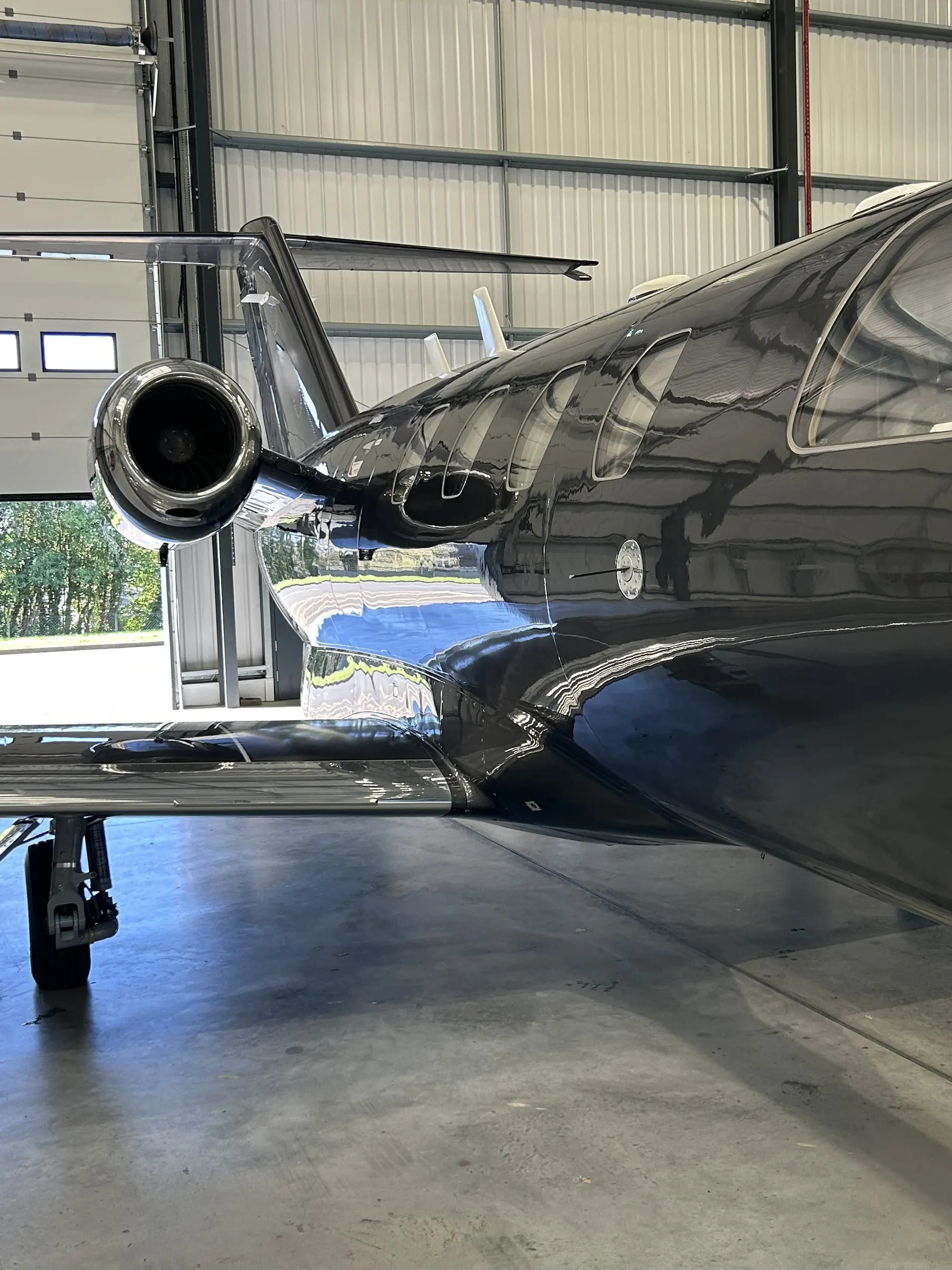
A routine exterior wash is a very different job to a full paint correction with ceramic coating. And the pricing reflects that.
Here’s a breakdown of what affects the cost at each level - so you know what you’re paying for and why.
Aircraft Cleaning
Cleaning is the most affordable service and the one most operators book regularly. But even within cleaning, costs vary.
A standard exterior and interior clean - washing the fuselage, cleaning the cabin, wiping down surfaces - sits at the lower end. It’s routine work and it’s priced accordingly.
Costs start to increase when deeper work is involved. Stain removal, sanitisation, disinfection treatments, leather conditioning, and detailed cabin work all add time - and time is what drives the price.
Aircraft size obviously plays a role too. A Cessna Citation takes less time than a Global 7500.
Short-notice bookings can also carry additional fees. If you need a same-day or next-day turnaround, expect to pay more for the flexibility. For example, at Xperior Aviation, we can offer same day service aircraft cleaning, but we apply a surcharge for last minute requests.
Many operators choose to set up a maintenance plan - having their aircraft cleaned on a regular schedule, whether that’s weekly, fortnightly, or monthly depending on usage. Other operators might choose subscription plans where they get a select amount of cleans monthly all at once for a discounted rate, choosing when they need the aircraft cleaned.
This keeps the aircraft consistently presentable and often works out more cost-effective than one-off bookings. If you’re unsure how often your aircraft should be cleaned, we’ve written about that here.
The Real Cost Is Not Cleaning
The price of a regular clean is small compared to what you lose by skipping it.
Charter clients and passengers expect a clean, well-presented aircraft. If they step on board and the cabin smells stale, the carpets are marked, or the fuselage is streaked with exhaust soot - that’s a booking they might not make again. And they won’t tell you why. They’ll just go elsewhere.
A clean aircraft isn’t a luxury. It’s the baseline expectation. The cost of regular cleaning is nothing compared to the cost of losing client confidence.
Polishing and Paint Correction
This is where the investment goes up - but it’s an investment that pays for itself.
Aircraft polishing removes oxidation, swirl marks, scratches, and surface contamination from the paintwork. It restores gloss, evens out the finish, and brings the aircraft back to a condition that looks sharp on the ramp.
Yes, it costs more upfront than a wash. But consider what it actually does for you.
Presentation
A professionally polished aircraft signals that it’s well maintained. For charter operators in particular, the moment a client steps onto the apron and sees the aircraft sets the tone for the entire flight. A faded, oxidised paint finish suggests neglect; a deep gloss on a freshly detailed fuselage communicates the level of care your aircraft cleaning and valeting standards reflect throughout the operation.
Paint Longevity
Regular polishing keeps the clear coat and paint in good condition, which delays the need for a full respray. Aircraft repaints are expensive - we’re talking significant five- or six-figure sums depending on the type. Maintaining the existing paintwork properly pushes that cost further into the future, ultimately saving you money.
Aerodynamic Efficiency
This one surprises people. A smoother, well-maintained paint surface reduces friction drag. Surface contamination, oxidation, and roughness disrupt laminar airflow over the fuselage, which increases parasitic drag and fuel burn. Research from Frasers Aerospace and industry bodies confirms that cleaner, smoother aircraft surfaces contribute to reduced drag - and while the savings per flight are modest, they add up over thousands of hours.
The cost of polishing depends on the aircraft size, the condition of the paint, and how much correction is needed. A light gloss enhancement is quicker and cheaper than a full multi-stage correction on neglected paintwork.
Sealants and Ceramic Coatings
Once the paintwork is in good shape, protecting it is the smart move. This is where sealants and ceramic coatings come in.
Sealants
Sealants are the more affordable option. They provide a protective layer over the paint that repels water, reduces dirt adhesion, and adds UV protection. They’re effective - but they’re shorter-term. Depending on the product and operating conditions, a sealant might last a few months before it needs reapplying.
For operators who want basic protection without a large outlay, sealants are a solid choice. They also make routine cleaning faster, since dirt and grime don’t bond as aggressively to a sealed surface.
Ceramic Coatings / Long Term Protection
Ceramic coatings are a bigger investment upfront, but they last significantly longer - often 12 months or more depending on the product and how the aircraft is maintained.
A ceramic coating creates a hard, hydrophobic layer over the paint that protects against UV damage, chemical contamination, exhaust residue, and environmental fallout. It makes the aircraft easier to clean, keeps it looking sharper for longer, and reduces the rate at which the paintwork degrades.
Like polishing, ceramic coatings also contribute to a smoother surface profile - which means the same drag reduction benefits apply. A coated aircraft is easier to keep clean, better protected, and marginally more fuel-efficient. Over the lifespan of a coating, those savings accumulate.
The cost depends on the aircraft size, the product used, the number of layers applied, and whether paint correction is needed beforehand. It’s not cheap - but when you factor in reduced cleaning costs, extended paint life, and the aerodynamic benefits, it’s one of the more practical investments an operator can make.
Paint Protection Film (PPF)
For aircraft that take the heaviest punishment on the leading edges - the nose, wing leading edges, and tail - paint protection film is one of the smartest investments an operator can make.
PPF is a thick, transparent urethane film applied directly over the paint. It absorbs impacts from stone chips, bird strikes, debris, and the constant abrasion from rain and dust at cruise speeds. The nose of the aircraft in particular takes a relentless beating in flight, and once the paint there starts chipping, the only fix is a respray.
Installing PPF on the nose, leading edges, and other high-impact areas dramatically extends the life of the paintwork underneath. When the film eventually wears, you simply replace the film - not the paint. Compared to the cost of a respray or even spot paint correction, PPF pays for itself many times over.
For operators flying frequently at high cycles, PPF is becoming the standard rather than the exception. It’s an upfront cost that protects one of the most expensive assets on the aircraft - the paint itself.
Other Factors That Affect Pricing
A few other things can influence the final cost of aircraft detailing:
Aircraft Condition
An aircraft that’s been regularly maintained is quicker and easier to work on. One that’s been neglected - heavy staining, oxidised paint, embedded contaminants - takes significantly more time and product to bring back.
Location and Access
Where the aircraft is based affects logistics. Airside access requirements, parking fees, and travel time all factor into the cost. We operate across English airfields including London-area fields and the Midlands, so we’re well set up for most locations - but remote or restricted sites may carry additional charges.
Short-notice Bookings
Same-day or next-day requests are possible but often come with a premium to account for schedule rearrangement and urgency.
Specialist Treatments
Things like heavy stain removal, mould remediation, odour treatment, or brightwork polishing are priced separately based on the scope of work.
What Should You Expect to Pay?
Every aircraft and every job is different. The best way to get an accurate figure is to tell us what you need - we’ll give you a clear quote based on the aircraft type, its condition, and the services you’re after.
Whether you’re looking for regular cleaning near London, paint correction at a Midlands airfield, or a full detail with ceramic coating, get in touch and we’ll give you a straight answer.
Want a clear quote for your aircraft?
Get a Quote