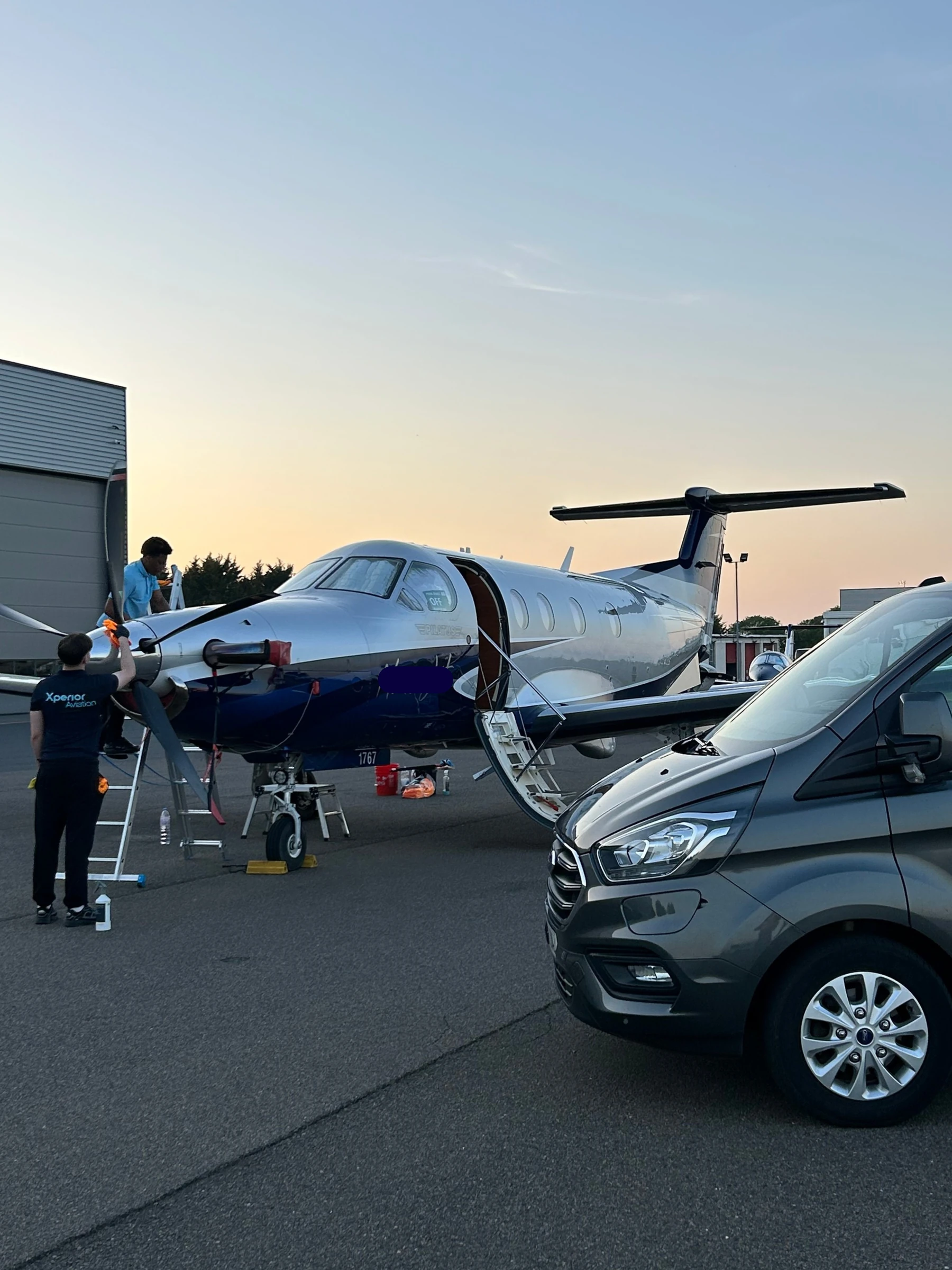
It seems to appear faster than you can clean it. But understanding why it happens is the first step to staying ahead of it.
The PT6A: A Reverse-Flow Engine
The majority of turboprop aircraft in business and general aviation are powered by variants of the Pratt & Whitney Canada PT6A. It is one of the most successful turbine engines ever built, with over 51,000 produced. The PC-12, King Air, TBM, Kodiak, and Caravan all run on PT6A variants.
What makes the PT6A unique is its reverse-flow design. Air enters through intakes near the front of the engine, beneath the propeller, and flows towards the back of the engine compartment. It then makes a 180-degree turn and flows forward through the compressor stages - first axial, then centrifugal.
The compressed air reverses direction again as it enters the combustion chamber, and the resulting hot gases pass through the turbine section before exiting through exhaust stacks on either side of the cowling, near the front.
This layout keeps the engine compact and lightweight. It also means the exhaust stacks sit right behind the propeller disc.
How the Soot Gets Everywhere
As the aircraft flies, the spinning propeller generates a high-speed slipstream which flows along the fuselage. Because the exhaust is positioned directly behind the propeller disc, the slipstream catches those hot exhaust gases and drags them straight back across the airframe.
The soot itself is a by-product of incomplete combustion - fine carbon particles produced when jet fuel doesn’t burn perfectly. This happens during every engine start, at lower power settings, and during ground operations. Even a well-maintained, brand-new PT6A produces visible exhaust soot. It’s a characteristic of gas turbine combustion, not a fault.
However, if soot streaking suddenly becomes heavier or changes pattern, it can indicate engine wear - specifically a degraded combustion liner. So while some soot is normal, a noticeable change is worth flagging with your maintenance provider.
Where It Shows Up: PC-12 vs King Air
Not all turboprops wear their soot the same way. The staining pattern depends on where the engines are mounted and how the airflow interacts with the airframe.
Pilatus PC-12
The PC-12 is a single-engine turboprop with the PT6A mounted in the nose. The exhaust exits on either side of the forward cowling. The propeller slipstream pushes the soot directly back along the upper fuselage and onto the wing roots.
Beechcraft King Air
The King Air has two PT6A engines mounted on the wings, so the soot pattern is different. The exhaust stains the engine cowlings, spreads across the wing surfaces behind each engine, and can streak back along the fuselage. The nacelle area takes the worst of it.
This is why aftermarket exhaust modifications like Raisbeck vortex generators and Frakes stacks were developed - they work to redirect King Air exhaust flow and reduce nacelle staining.
Other PT6A Turboprops
The TBM series, Cessna Caravan, and Kodiak experience similar issues to varying degrees. Any aircraft with a PT6A - or any turboprop engine with forward-facing exhaust stacks - will accumulate soot on its airframe. The severity depends on engine position, cowling design, and how the exhaust interacts with airflow.
Why It Matters: It’s Not Just About Looks
Yes, a soot-streaked aircraft looks neglected. For operators who charter or have clients boarding regularly, presentation matters - nobody wants to walk up to an aircraft that looks like it hasn’t been touched in weeks.
But the real issue goes deeper than appearance.
Paint Damage
Carbon soot doesn’t just sit on the surface. The exhaust residue contains carbon particles, acids, and trace metals that bond to the paint and clear coat over time. The longer it sits, the harder it becomes to remove, and the more it embeds into the finish.
Left uncleaned, soot will etch through the clear coat and into the base paint. On matte or semigloss finishes the problem is even worse - these surfaces are more porous and more susceptible to permanent staining. Once the soot has penetrated the paint, no amount of cleaning will fully restore it. At that point you’re looking at paint correction or a respray, neither of which is cheap on an aircraft.
Temperature cycling during flight makes this worse. The fuselage heats up and cools down repeatedly, which causes the soot to bond more aggressively to the surface with every cycle.
Corrosion Risk
Beyond the paint, exhaust residue can contribute to surface corrosion if it’s allowed to sit on bare or thinly coated metal areas - particularly around exhaust stacks, fasteners, and panel joins. Professional cleaning removes not just the visible soot, but the corrosive compounds within it.
Keeping On Top of It
For turboprop operators, exterior cleaning isn’t optional. It’s part of looking after the aircraft. The key is frequency - regular washing prevents soot from bonding to the paint and keeps removal straightforward. Once it’s been left for months, it becomes a far more labour-intensive job, and the risk of surface damage increases.
Ceramic coatings offer an additional layer of protection. A properly applied ceramic coating creates a barrier between the paint and the exhaust residue, making soot significantly easier to wipe off during routine cleaning and reducing the rate at which contaminants bond to the surface. For turboprop operators dealing with constant soot exposure, it’s one of the most practical investments in paint preservation.
At Xperior Aviation, turboprop detailing is a significant part of our work. We operate across English airfields - including the London area and the Midlands - and we understand the specific challenges that PT6A-equipped aircraft present. Whether it’s a routine exterior wash to stay on top of soot buildup, or a full detail including ceramic coating application, we work with operators to keep their aircraft protected and presentable.
If your turboprop is overdue a clean, get in touch.
Need a turboprop specialist who understands PT6A soot?
Get a Quote