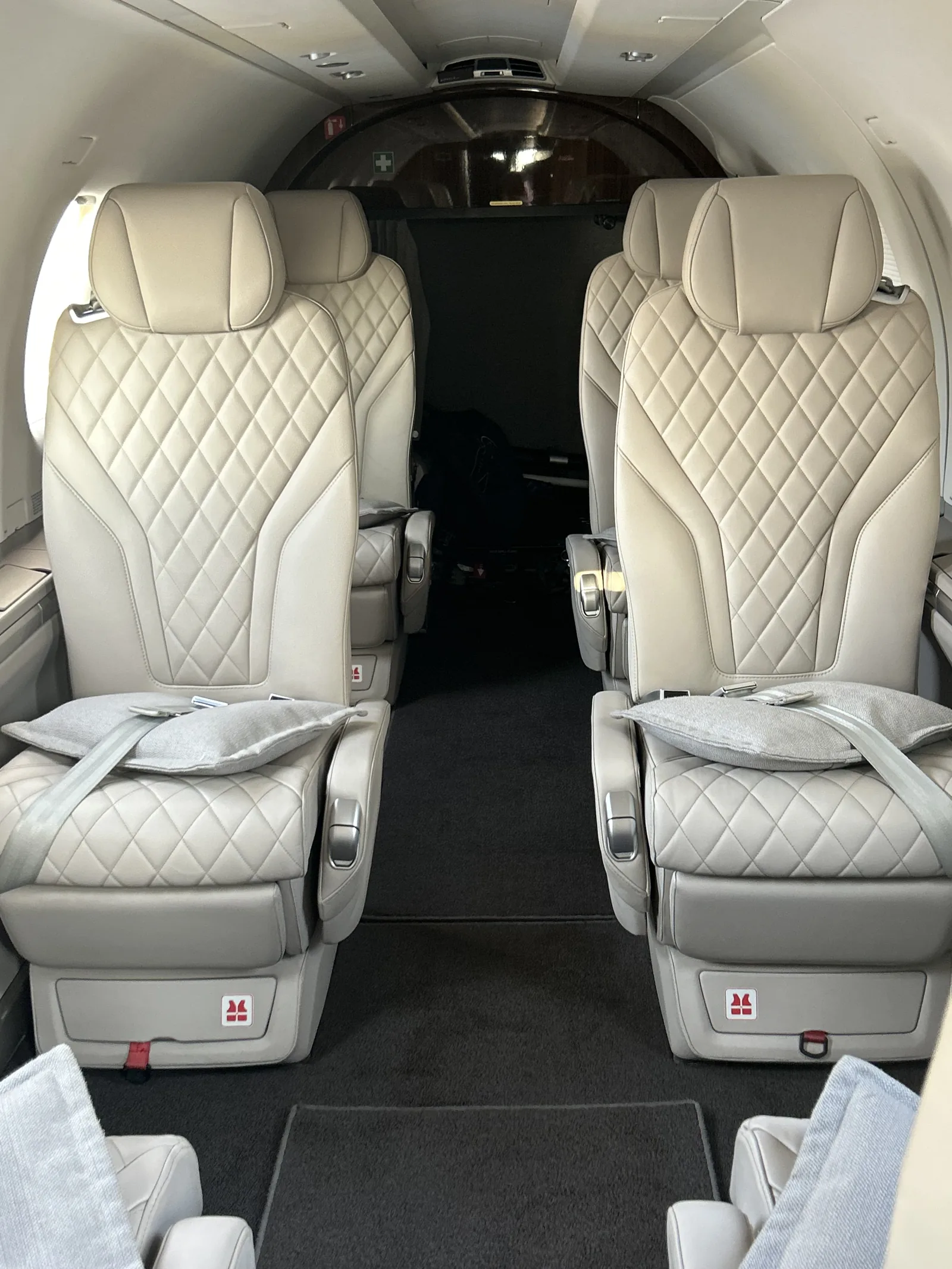
How Ink Stains Happen
Most ink stains on aircraft leather come from ballpoint pens. It’s one of the most common cabin incidents we see. Someone writes something mid-flight, the pen makes contact with the seat or armrest, and a mark is left behind.
Children are another common cause. Felt tips, markers, biros left lying around - it doesn’t take much. A few seconds of unsupervised colouring and you’ve got ink embedded in a seat that costs thousands to replace.
It’s rarely dramatic. It’s usually small, barely noticed at first - and that’s the problem.
Why Ink Stains Are So Difficult to Remove
Ink doesn’t just sit on leather. It penetrates it.
Leather is a porous material. When ink makes contact with the surface, it begins absorbing into the fibres almost immediately. Within the first few hours, the stain is still relatively close to the surface and can often be lifted with the right products and technique.
After 24 to 48 hours, the situation changes. The ink dries, bonds with the leather fibres, and sets into the material. At this point, removal becomes significantly harder - and riskier. Aggressive cleaning can strip the leather’s finish, dry it out, or spread the stain further.
Once the ink has fully set - beyond a few days - it’s often too far gone to remove without damaging the leather. Most professional leather ink removers will tell you the same thing: if you don’t act within the first day or two, the chances of a clean removal drop dramatically.
Why It’s Even More Complicated on Aircraft
Aircraft leather isn’t the same as your sofa at home.
All leather used in private aircraft interiors must comply with aviation fire safety regulations - specifically FAR 25.853 (FAA) or the equivalent EASA CS-25.853 standard. This means the leather is treated with fire-retardant chemicals during the tanning process, and any repair products, dyes, or fillers used on it must also meet those burn-test requirements.
You can’t just use any off-the-shelf leather cleaner or stain remover. The wrong product could strip the fire-retardant treatment, damage the finish, or leave the leather non-compliant with safety standards. That turns a stain problem into an airworthiness problem.
What to Do When You Find an Ink Stain
Act fast. The single most important thing is time. The sooner the stain is addressed, the better the chance of a clean removal.
If you spot ink on the leather during or immediately after a flight, don’t try to scrub it out yourself. Rubbing the stain can spread it further into the leather and make professional removal harder.
Instead, contact an aircraft detailer as soon as possible - ideally the same day. A professional who understands aviation leather can assess the stain, use the right products, and work within the safety requirements of the interior.
The longer you wait, the more expensive the fix becomes.
What Happens If You Leave It Too Long
If the ink stain sets and can’t be safely removed, you’re looking at one of two options - neither of which is cheap.
Smart Repair
A smart repair involves a specialist touching up the affected area - re-dyeing, filling, and refinishing the leather to blend the damage. On aircraft leather, this is possible, but the materials used must comply with FAR 25.853 or EASA burn-test standards. That means certified fire-retardant dyes, fillers, and conditioners. Not every leather repair company can do this - it needs to be someone who works with aviation interiors specifically.
Smart repairs are the more affordable option, but they’re still a significant cost compared to catching the stain early.
Leather Replacement
If the stain is too severe or the leather has been damaged by incorrect cleaning attempts, the panel or seat may need to be reupholstered. Aircraft-certified leather isn’t cheap, and neither is the labour.
Individual seat reupholstery on a private jet can range from £5,000 to £25,000+ depending on the aircraft type and the leather used. For a full cabin, you could be looking at six figures.
All because of a pen.
Prevention Is Cheaper Than Repair
A few simple steps can reduce the risk:
- Remove loose pens and writing materials from the cabin after every flight
- Provide capped pens or pencils only, and store them in designated holders
- If children are on board, keep markers and colouring materials away from leather surfaces
- Brief cabin crew or handlers to check for stains during turnaround inspections
- Have your leather treated with a protective coating - it won’t make the leather stain-proof, but it buys you more time before ink penetrates the surface
And if a stain does happen, don’t wait. A same-day call to a professional aircraft detailer is almost always cheaper than the alternative.
Got an ink stain that needs urgent attention? We carry out interior detailing and stain removal across English airfields - including London and the Midlands.
Get in Touch