Cleaning that leaves nothing behind.
A rinseless wash that cuts water use by more than 90% and leaves no contaminated run-off on the apron. Carried out wherever the aircraft is parked.
Urgent? Call us directly - 0333 404 7908
What comes off an aircraft has to go somewhere.
With a dry wash, it leaves with us.
Wash an aircraft with water and what comes off it is not water any more. It carries degreaser, engine oil, hydraulic fluid and carbon deposits, and on an open apron that mixture goes wherever the surface water goes.
A dry wash produces none of it. The contamination is lifted onto cloths and leaves the airfield with us, to be disposed of as waste.
On average a business jet takes 570 litres of water for a wet wash, averaged across light through to ultra-long-range aircraft. That is around 1,140 water bottles.
A rinseless wash takes somewhere around 20 litres. That is a decrease in water use of more than 90%.
But what comes off the aircraft matters more.
All that contaminated water has to be treated properly, or captured through drainage tanks. Which is why your aircraft ends up having to go to a specific wash bay.
That costs you time - either flying to a location that has one, or paying handling to get you to it - and turns washing into a tedious job. It is worse again if the airport your aircraft is sitting at has no wash bay at all.
Sometimes positioning an aircraft to another airport for a wet wash creates a bigger footprint than the dry wash would have in the first place.
No hoses, and nothing left on the apron.
What comes off without water.
Drag the slider to compare. Both of these were done dry, where the aircraft was parked.
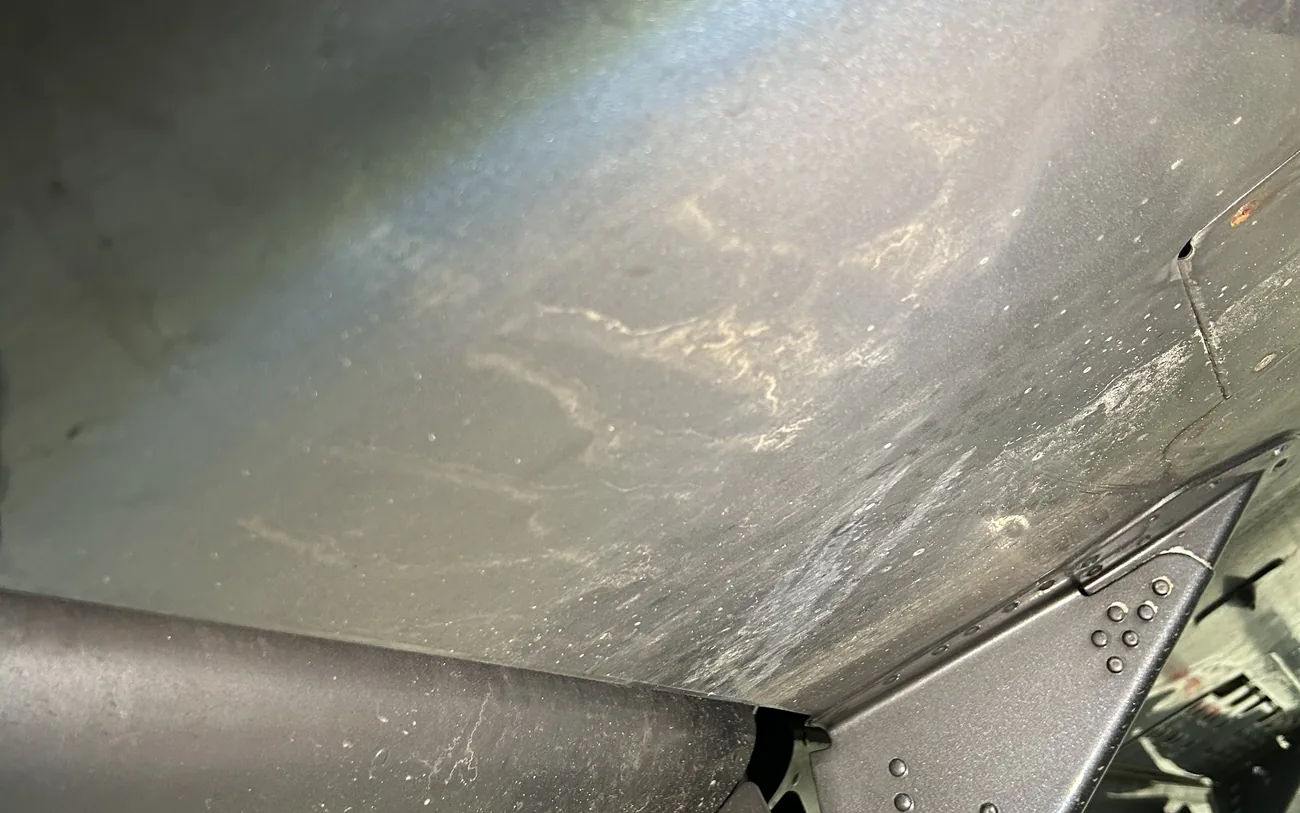
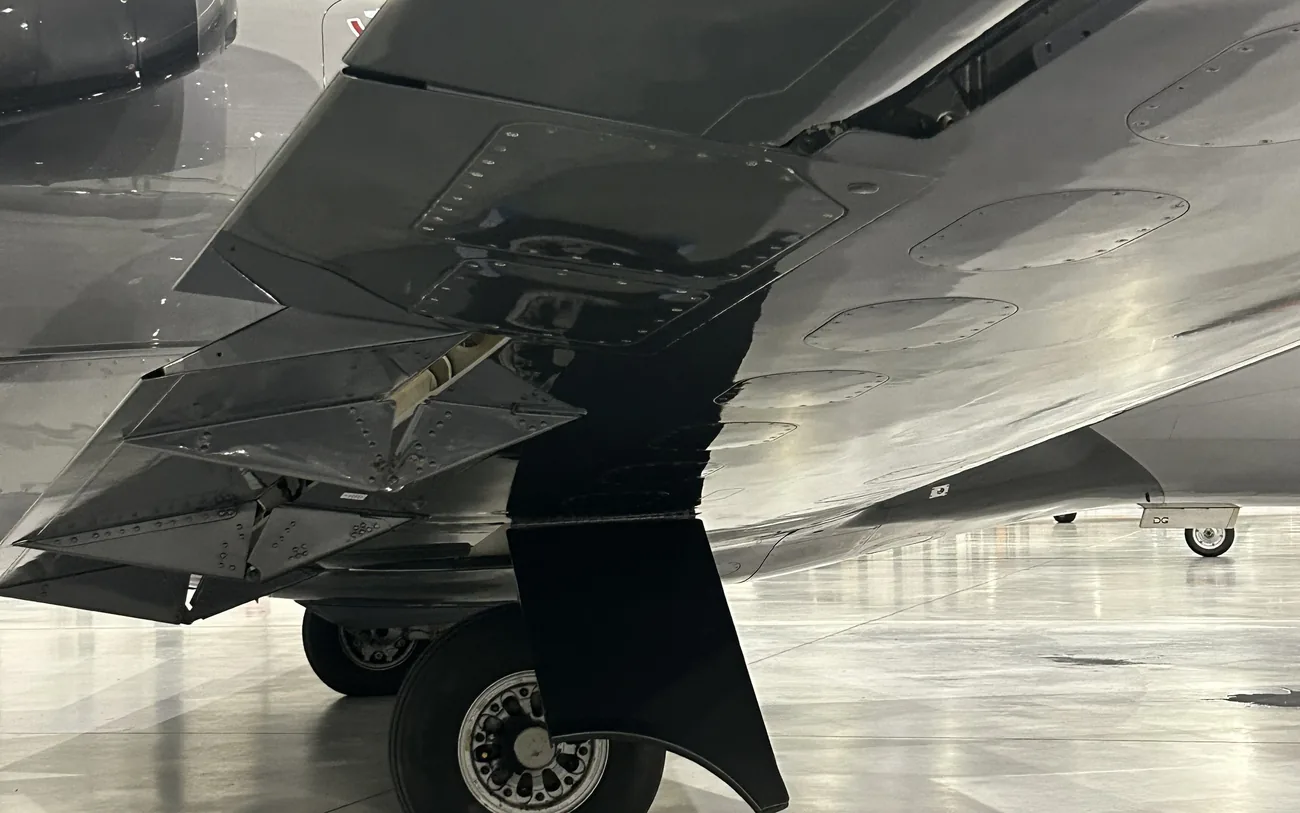
Exterior - exhaust staining lifted, belly degreased
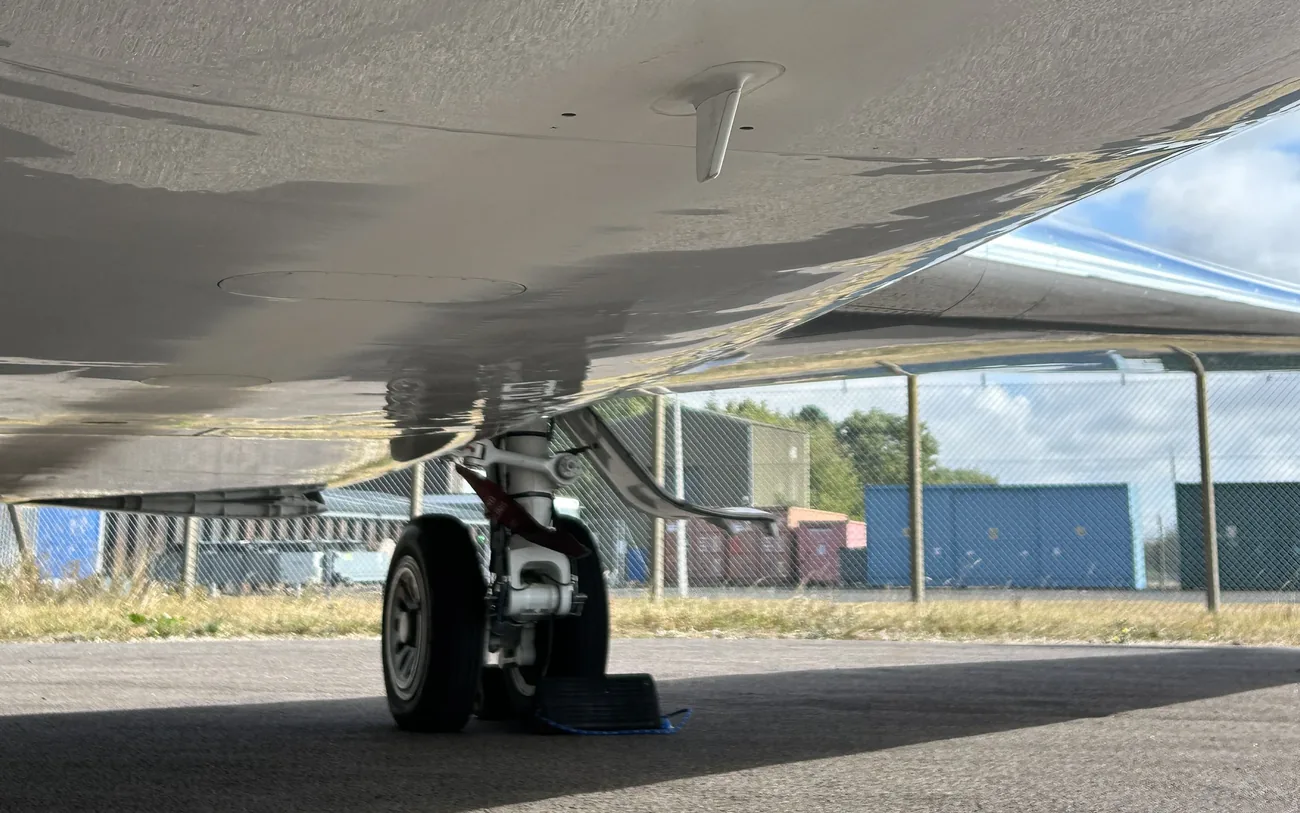
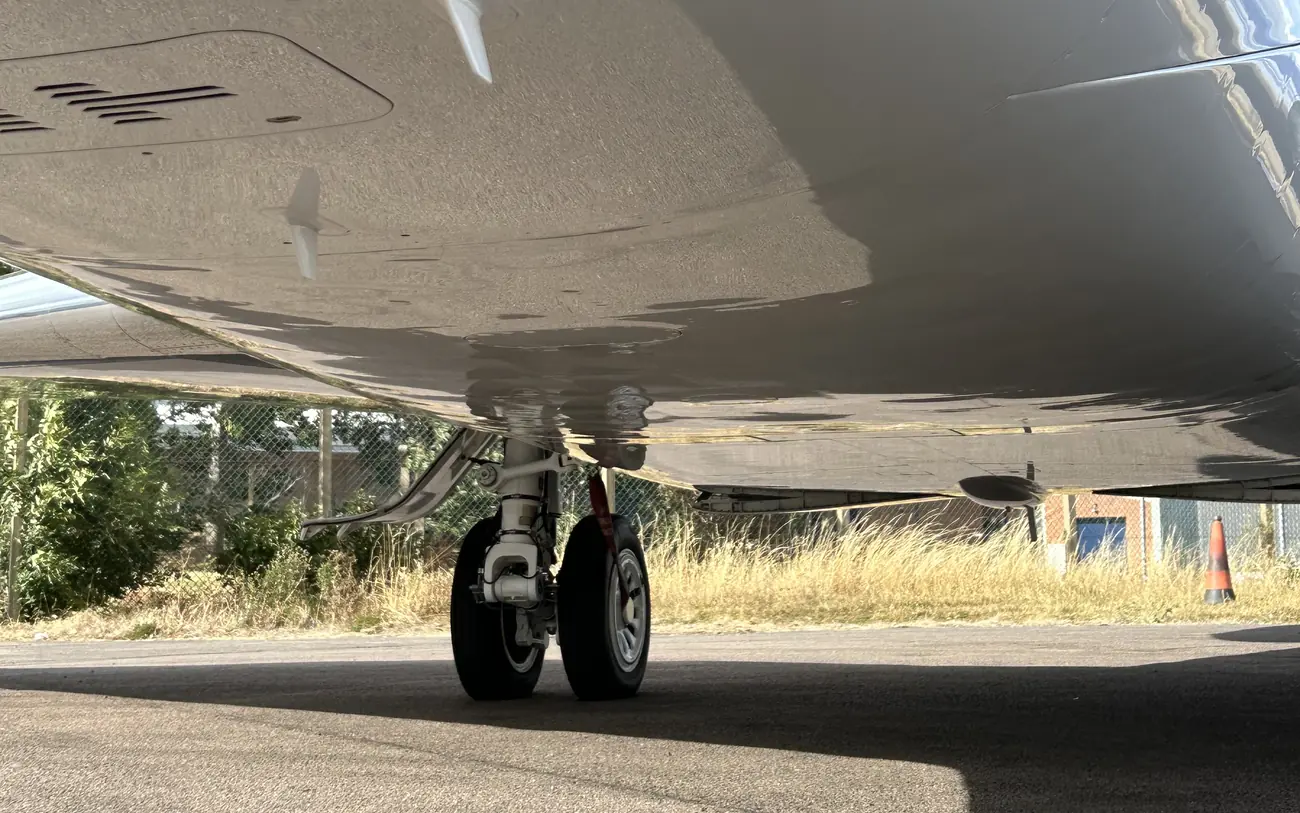
Exterior - belly filmed over, then dry washed back to gloss
Make cleaning more convenient while becoming more sustainable.
Beyond the finish itself.
The contamination leaves with us
No run-off means no degreaser, oil or carbon residue reaching airfield surface water. It comes away on cloths and is disposed of as waste.
No effluent to tanker away
Captured wash water still has to be collected, transported and treated. Removing the water removes that chain and the footprint attached to it.
What you get
A clean aircraft, without all the residue.
Cleaned where it stands
On the stand, in the hangar, or on a grass field with no facilities - so the aircraft never has to be repositioned to be cleaned.
Trained on the technique
Encapsulating products only work if they are used properly. Done carelessly this method marks paint, so our technicians are trained on it rather than handed a bottle.
No water spotting
Nothing is left to dry on the surface, so no water spots or streaks are left behind.
Aircraft we dry wash regularly.
Our existing clients range from FBOs, to fleet operators and private clients.
5.0 average Google rating.
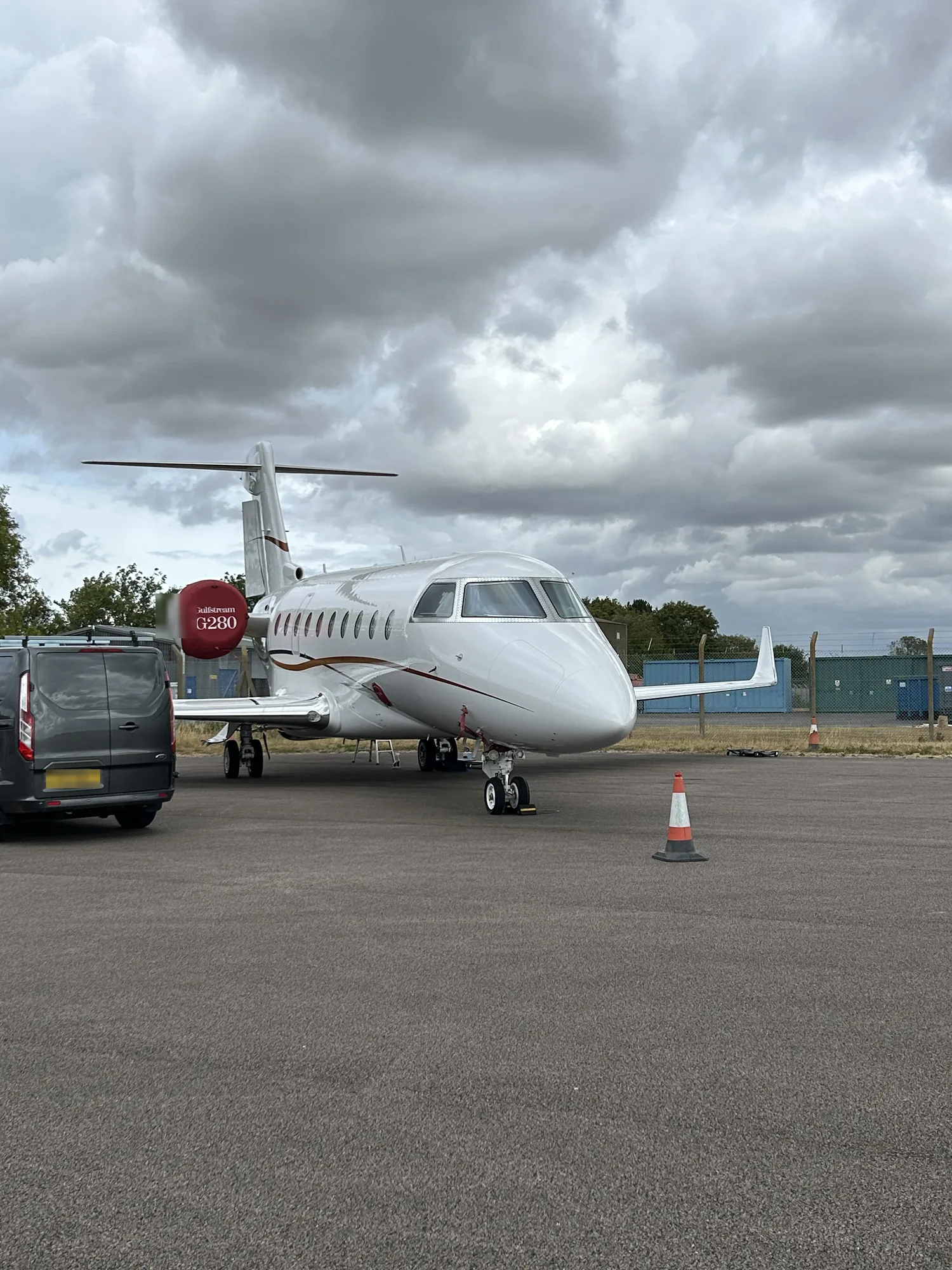
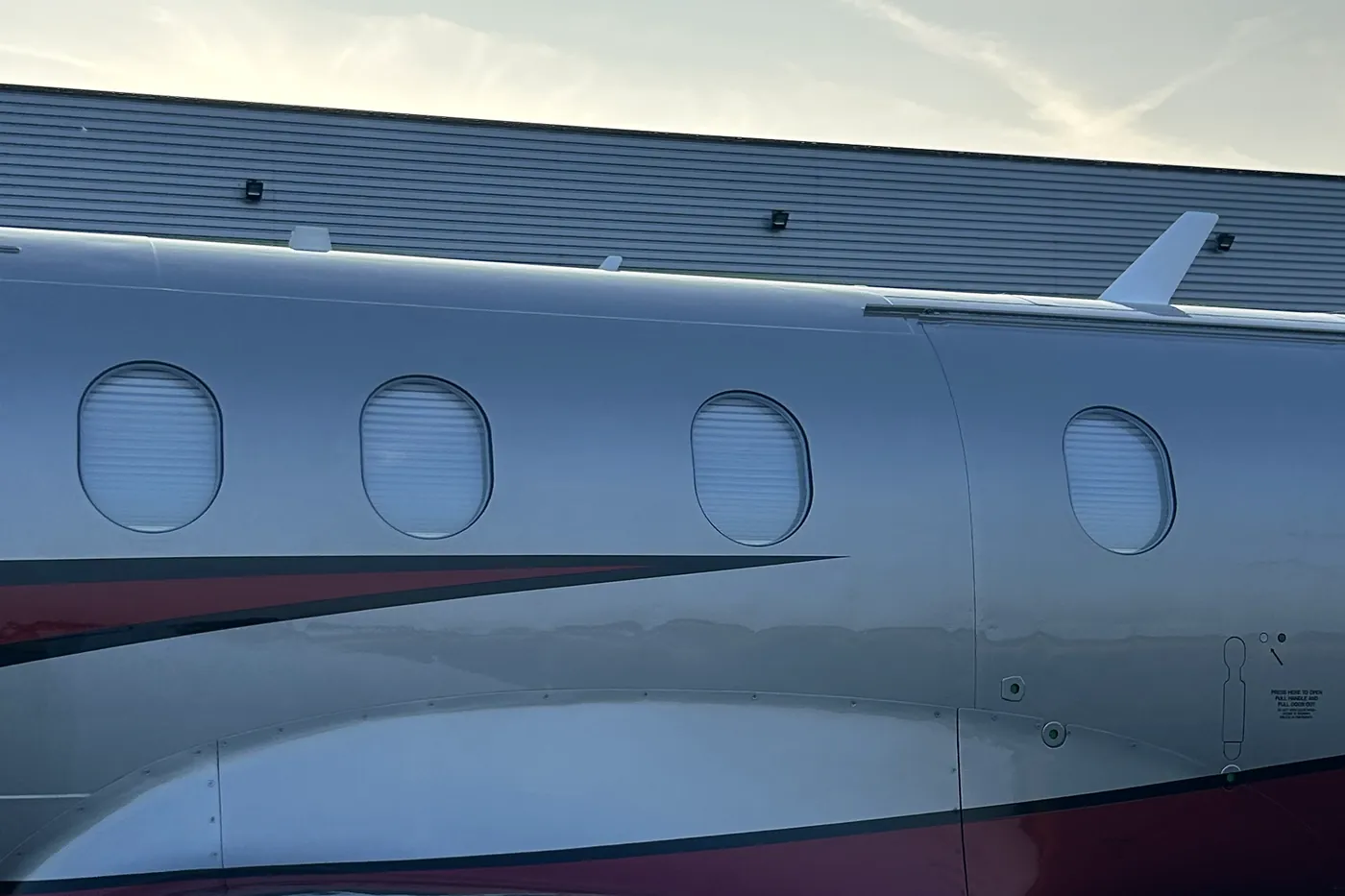
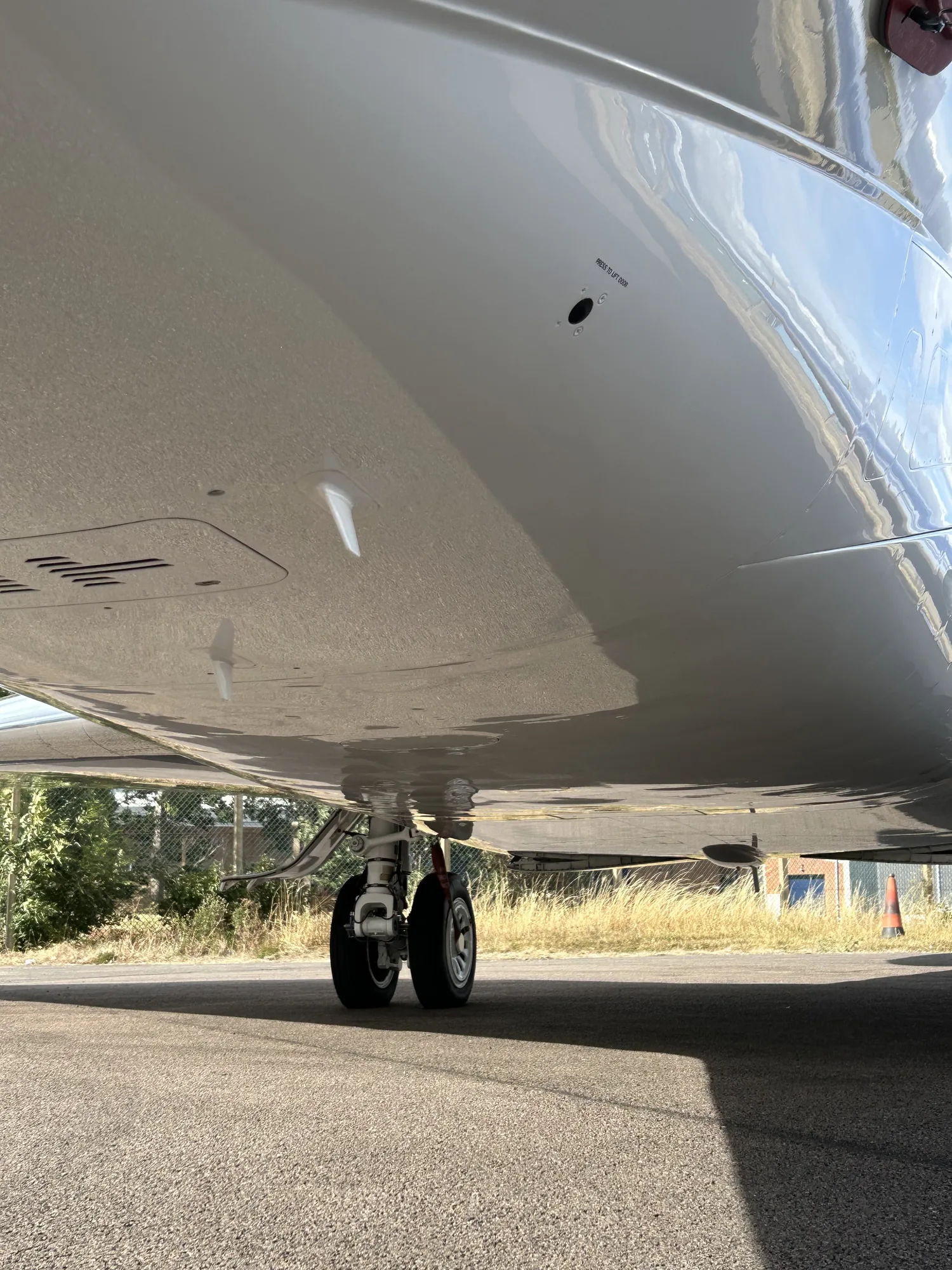
Xperior has been nothing short of exceptional for our PC12 fleet. Flexibility, availability, quality of work when compared with the price is a no-brainer. Cannot recommend them enough.
Start here
Tell us the aircraft and where it stands.
We will come back with a price for a one-off wash and for a regular programme.
Also From Us