Glycol comes off the wing. It does not leave the aircraft.
De-icing fluid does its job and then runs somewhere else. Cleaning the residue it leaves behind, before it dries into a season of build-up.
Urgent? Call us directly - 0333 404 7908
It works by not rinsing off.
Which is exactly why it is still there in March.
Thickened de-icing fluid is designed to cling. That is the whole point - it has to stay on a wing through taxi and hold off refreeze until rotation. A fluid engineered to resist being blown off is not going to rinse away on its own.
So it runs. Off the wing, down the fuselage, into gaps and cavities, and onto everything below. What sheds in the airflow leaves; what collects somewhere sheltered stays, dries to a film and gets topped up at the next departure.
Dried fluid goes sticky rather than hard. It holds dust, grit and insect debris right through the following spring, so a winter of residue becomes a summer of things stuck to it.
It collects where the airflow does not reach - hinge lines, control surface gaps, flap tracks and the cavities behind them. The places nothing washes out and nobody looks.
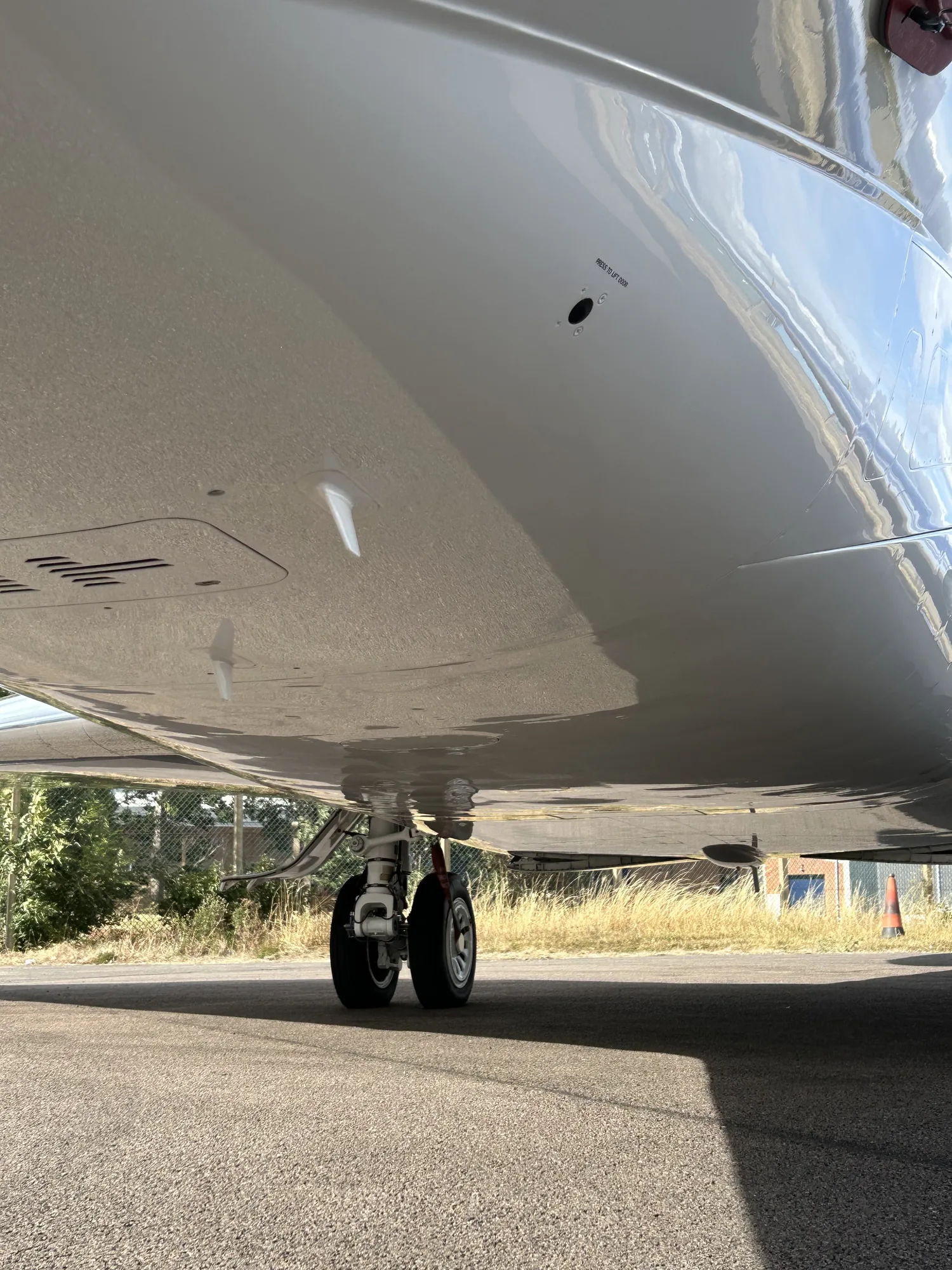
It stains, and it gets into the belly. Dried glycol films over paint and leaves a haze a routine wash goes straight past, and whatever runs off the top of the aircraft ends up on the bottom of it, mixed with brake dust.
How we clear a season of it.
Methodically, and in the places it actually collects.
The quiet areas first
Hinge lines, flap tracks and control surface gaps are where it accumulates and where a normal wash never goes. That is the part of this job that matters.
Products that lift, not strip
Dried glycol wants softening and lifting. Aggressive solvent on painted surfaces trades one problem for a worse one, so it gets the right chemistry and time.
The belly included
Everything that ran off the wing is underneath. A residue clean that skips the underside has done half the job.
Timed to the season
Best done once the de-icing season is over, so you are clearing the whole winter rather than the last flight.
Once, at the end of the de-icing season, is the important one. Clear the winter in a single visit while everything is still soft, and the aircraft goes into spring clean rather than tacky.
Mid-winter, if the aircraft is de-iced heavily. An aircraft departing from a cold field several times a week accumulates faster than one that saw it twice, and does not want to wait until March.
Either way it pairs naturally with a full exterior. The airframe is getting washed anyway - this is making sure the parts that hold residue are included rather than skipped.
Aircraft we look after.
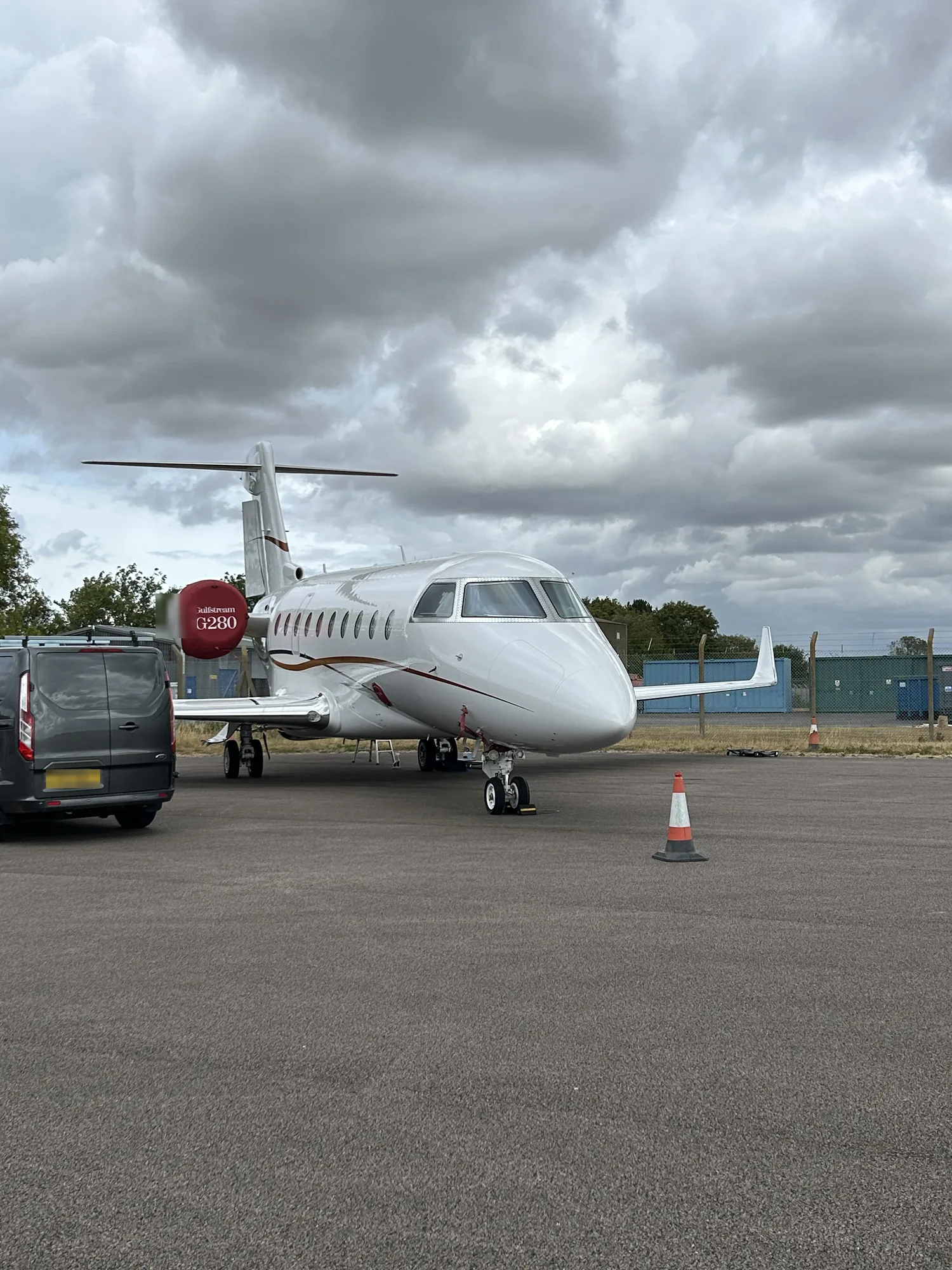
Our existing clients range from FBOs, to fleet operators and private clients.
5.0 average Google rating.
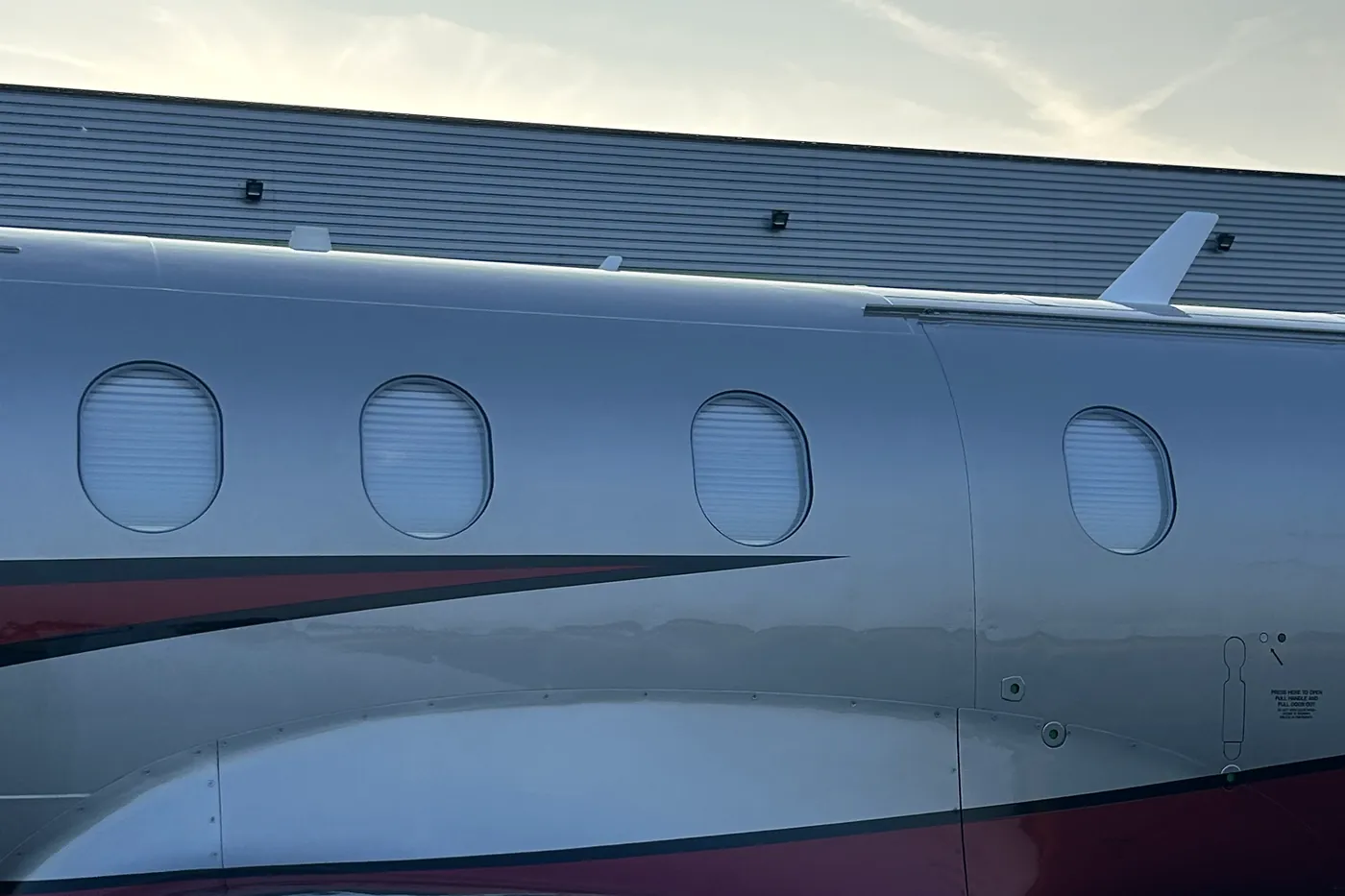
Xperior has been nothing short of exceptional for our PC12 fleet. Flexibility, availability, quality of work when compared with the price is a no-brainer. Cannot recommend them enough.
Start here
Tell us the aircraft and the winter it has had.
Type, base and roughly how often it has been de-iced. We will come back with what clearing it looks like.
Also From Us